Key takeaways:
-
PDRN is a purified fragment of DNA, originally sourced from salmon (or trout) sperm cells, used for its tissue-repair signalling properties — not "DNA" in the sense of genetic material that alters your own cells
-
It works by activating adenosine A2A receptors, which supports tissue repair and collagen synthesis — a specific, studied mechanism, not a vague "regenerative" buzzword
-
PDRN serum (topical) and PDRN injectable (like Rejuran) are not interchangeable — they differ substantially in how much reaches the tissue that needs it
What PDRN Actually Is
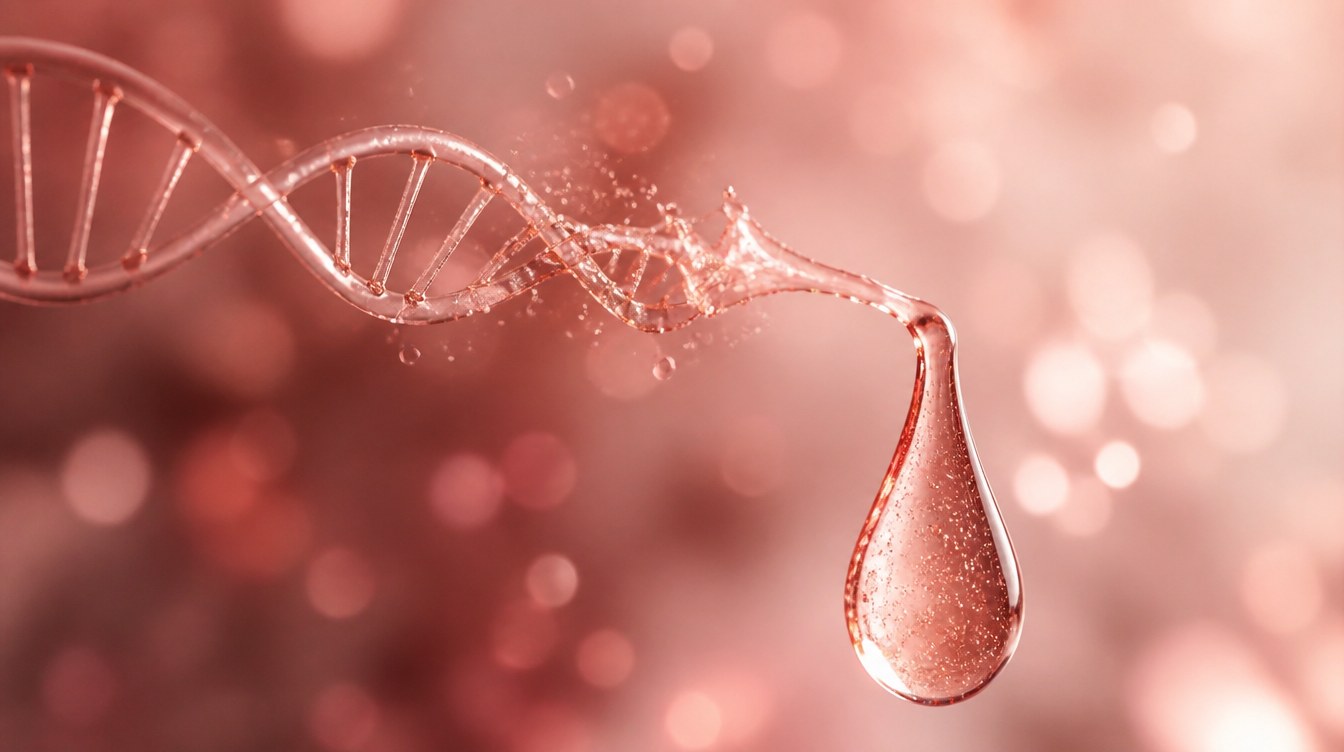
PDRN is a polydeoxyribonucleotide — a purified fragment of DNA extracted and processed from salmon (or trout) sperm cells, valued not for its "genetic" properties but because its molecular structure closely resembles human DNA fragments, which is what allows it to interact with human tissue-repair pathways.
The Actual Mechanism
PDRN's tissue-repair effect works primarily through activation of adenosine A2A receptors, which are involved in regulating inflammation and supporting fibroblast activity — fibroblasts being the cells responsible for producing collagen. This is a specific, published mechanism rather than a general "boosts skin health" claim.
By the Numbers: What the Research Shows
Peer-reviewed research on PDRN's mechanism — including studies published via PubMed Central — has documented its effect through A2A adenosine receptor activation, which promotes fibroblast proliferation and migration, increased collagen accumulation, and reduced inflammatory cytokine expression in skin tissue.
Serum vs Injectable: The Distinction That Matters
Topical PDRN serum applies the ingredient to the skin's surface. Skin is a barrier by design, and large molecules like PDRN face significant absorption limits when applied topically — meaning a serum's effect is inherently more limited than direct delivery to the dermis.
Injectable PDRN (as in Rejuran) delivers the ingredient directly into the dermis, where the tissue-repair signalling can actually take place at meaningful concentration. This is the clinically studied delivery method behind most of the published PDRN research.
What This Means Practically
If a "PDRN serum" is marketed with injectable-level claims, that's worth questioning — the delivery method matters as much as the ingredient itself. A conversation with a treating physician about which form of PDRN (if any) suits your goals is more useful than assuming "PDRN" means the same thing across every product carrying the label.
Ready to Book a Consultation?
All treatments performed personally by Dr Sin Yong at 9 Scotts Road, #12-01 Pacific Plaza, Singapore.
Frequently Asked Questions
Rejuran is a specific branded injectable product that uses PDRN as its active ingredient. PDRN itself is the ingredient category; Rejuran is one product built on it.
No. Topical serums face skin-barrier absorption limits that injectables bypass by delivering directly into the dermis. The two are not interchangeable in terms of expected effect.
PDRN is a purified, processed molecular fragment used for its specific tissue-signalling properties — not raw biological material. It does not interact with or alter a patient's own genetic material.